What a year of coding with AI actually cost

In June 2025 our AI coding bill was €124. Last month it was €4,680.
In May last year, Thomas and I started experimenting at WeAreDevelopers, with agents doing more and more of the coding. We called it Labs. At 16:13 CEST today, Labs became the public side of wearedevelopers.com.
The chart is built from every card statement and invoice since then.
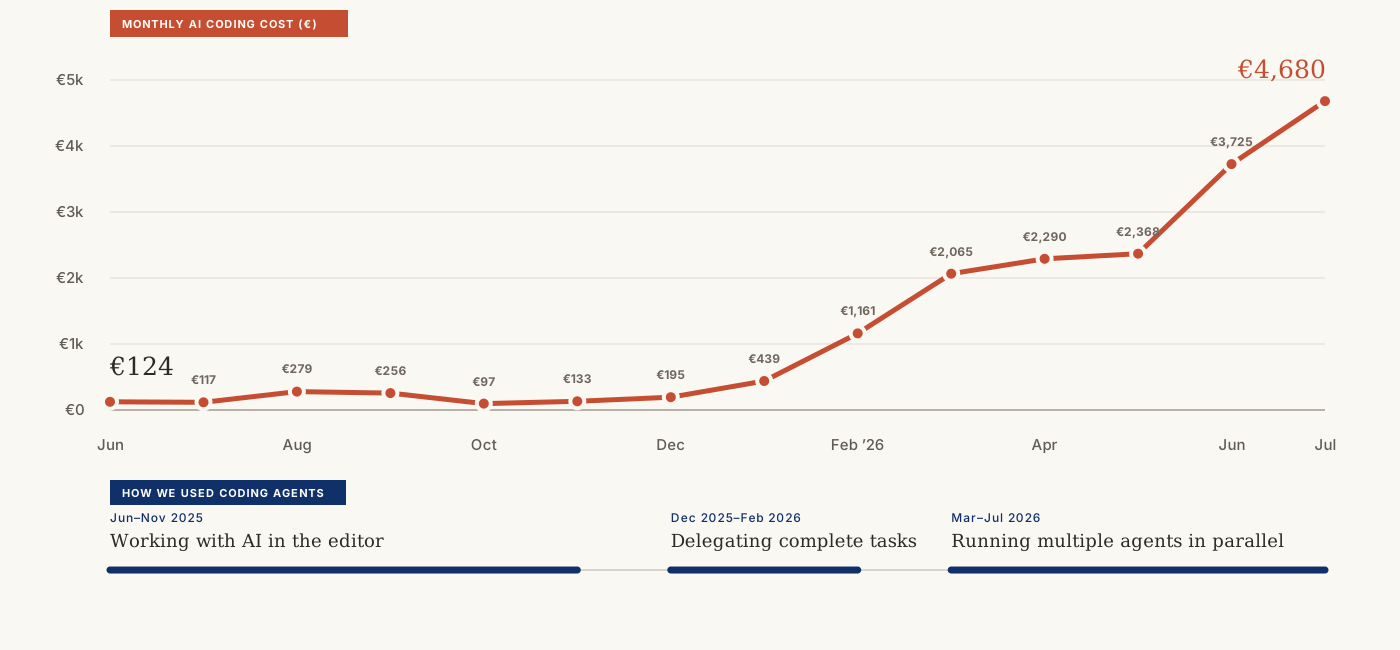
Model prices moved in both directions over those fourteen months: Opus got cheaper1, GPT got more expensive2. Most of the increase came from volume. We ran far more work through the models.
Three phases
We didn’t plan the phases, and the change wasn’t gradual. Each time we’d learned enough, we switched to a different way of working. Each new way ran more work through the models than the one before.
Working with AI in the editor. The first commit landed on June 12, 2025. For the first half year we worked in VS Code with GitHub Copilot, prototyping what Labs should be. More than autocomplete: Copilot’s chat and agent mode made the changes, but in small, editor-scoped steps. “Can we hide the volume slider, keep mute unmute”, one conversation at a time, the total capped by how fast a person can steer and review. Our two machines preserved close to six thousand of those requests.
The bill barely moved. Copilot billed those as premium requests3. Thousands of requests came to tens of euros. That’s the flat part of the curve.
Delegating complete tasks. Between November and January we stopped pairing in the editor and started handing over tasks. Opus 4.5, released on November 24, was the step change for us. With Pi, it was reliable enough to take a complete task: read the repo, make the change, run the tests, and keep going. Complete tasks used far more tokens than editor requests. The monthly bill started rising.
Running multiple agents in parallel. From late February on, most days had several Pi sessions, often overlapping. I also ran the changes through Codex for review. We still reviewed the results ourselves and didn’t run agents unattended. The change was volume, not autonomy. The models came prepaid through OpenCode Zen and OpenRouter.
The production push
At the end of May, the goal changed: Labs would replace the existing public side of wearedevelopers.com. June and July became a production push.
At the same time, Anthropic released Claude Fable 5 on June 9, at twice the price of Opus, and of course I had to try it. It briefly became my model for planning and writing, but it was too expensive to keep as a daily driver.
The production push with frontier models made July the outlier: €4,680. Time will tell what a normal month costs. I assume it comes in under a thousand euros per person, and that we’ll try to get more of the work onto subscriptions.
The statements show how much money we ran through the models. They don’t show how long a piece of work took, how much work we finished, or whether it was any good. We moved faster. We used some of the time we saved to keep debt from accumulating. But I can’t tell whether we were twice as fast or five times.
Knowing when the work is finished is still a judgment. Thomas and I have made that call together for eighteen years, since Wollzelle.
The agents do more of the work now. They don’t decide when it’s done.
-
Claude Opus 4 launched in May 2025 at $15 per million input tokens and $75 per million output tokens. Opus 4.5 cut both prices by two-thirds, to $5/$25. ↩
-
The original GPT-5 cost $1.25/$10 per million input/output tokens. GPT-5.5, released April 23, 2026, costs $5/$30: four times as much for input and three times as much for output. ↩
-
GitHub began billing premium requests on June 18, 2025. Paid plans included a monthly allowance, then charged $0.04 per additional request. Inline suggestions remained unlimited. ↩